A 12-week embedded engagement that makes one of your teams agentic-native — practicing Agentic Continuous Delivery on Claude Code. We engineer the harness; your engineers write the production code and own it after we leave.
MIT found ~95% of enterprise generative-AI initiatives never drove the growth they targeted. Licenses are easy; changing how a team ships is not.
Courses and plugins teach individuals. They don't govern AI output, harden the pipeline, or change how a team delivers. That's an org-change problem.
Big-4 engagements are junior-staffed and process-heavy, thin on current agentic-DevSecOps practice. The gap is one senior practitioner, embedded and hands-on.
Full-time, single-customer, twelve weeks — one senior principal embedded with your team. Your engineers do the building and keep everything we ship together.
Assess 3–5 teams: toolchain, Claude Code adoption, security gates, and ACD/CD readiness. Define the target harness and choose the first pilot.
Go deep with one pilot team (plus 1–2 light-touch shadow teams) on their real backlog. Engineer the Claude Code harness and install the ACD guardrails.
A costed, sequenced plan to scale the harness past the pilot, plus train-the-trainer so internal champions can carry it forward themselves.
The harness is the engineered Claude Code environment your engineers work inside, built on the open Agentic Continuous Delivery ↗ operating model. It lasts beyond the engagement because your team builds with it daily.
CLAUDE.md standards, plus .claude/ PreToolUse / PostToolUse hooks that enforce them automatically on every change.
Reusable agents, skills, and slash commands — with MCP wiring that gives them your internal context.
OIDC identity, SAST / SCA / secret-scan gates on every change, versioned delivery-contract artifacts, and small-batch sessions.
The goal is shipping faster and more safely by adopting agentic techniques — not generating more code. So success is measured the way you'd measure any high-performing team. No agent-vs-human comparisons, no lines-of-code vanity. Targets are agreed and baselined in Discovery.
The DORA four keys: deployment frequency, lead time for changes, change failure rate, and failed-deployment recovery time.
OWASP DSOMM / NIST SSDF: mean time to remediate critical findings, critical vulns escaping to production, and security-gate coverage.
What you keep: ACD guardrails in place, and teams operating the harness on their own.
The patterns that took Continuous Integration from contrarian to standard practice now apply to AI-assisted engineering.
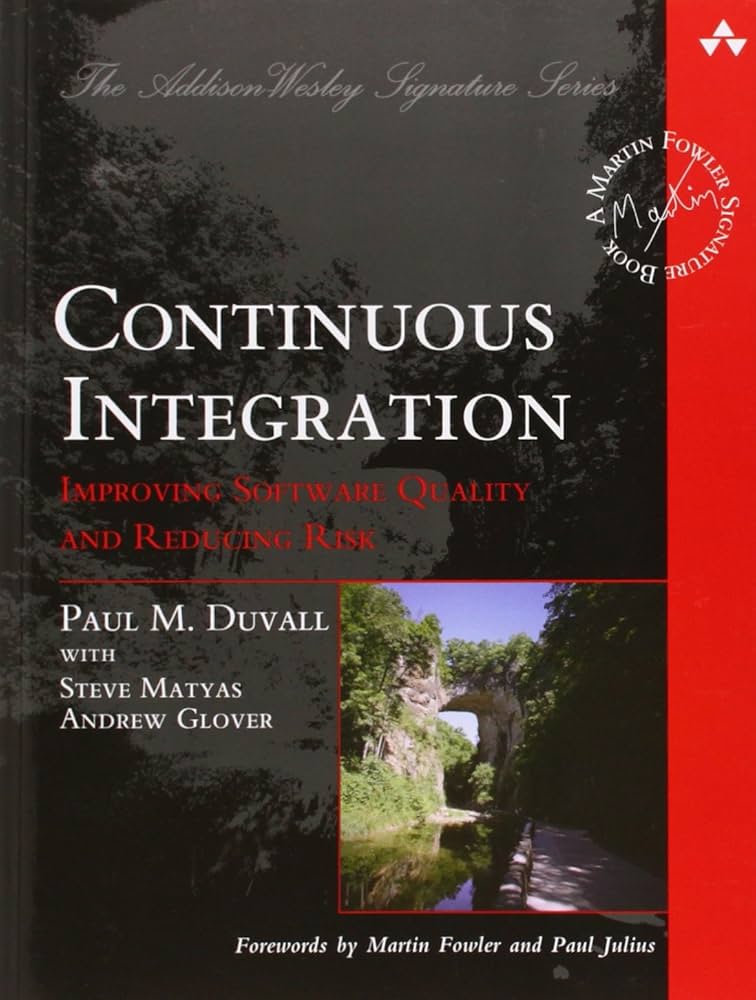
Jolt Award-winning Continuous Integration: Improving Software Quality and Reducing Risk (Martin Fowler Signature Series) helped grow the discipline.
Scaled from zero to nearly 100 enterprise customers and AWS Premier Partner status, then acquired in 2017.
Customers served: Sony Pictures · Verizon · Citi · 3M · Prudential · Macy's · Northwestern Mutual · Commonwealth Bank of Australia · National Cancer Institute · CollegeBoard, and many others.
Led security engineering teams at AWS, building services and patterns that helped Fortune 500 customers operationalize DevSecOps across hundreds of engineering teams.
Founded Redacted Ventures to do for AI-native development what CI/CD did for software delivery: make the discipline repeatable, measurable, and teachable. Daily, hands-on AI coding practice since early 2023, visible in the open-source patterns we publish.
Every pattern the engagement installs is public — free to read and build on. More writing at paulmduvall.com ↗.
A working reference for AI-assisted engineering. Context files, rules, multi-agent orchestration, and testing patterns.
View repository →Transforms Claude Code into a complete development platform with AI-powered commands that automate your software development workflow.
View repository →A single source-of-truth rules system for AI-assisted development. Version-controlled, reviewable, and enforceable across every tool your team already uses.
View repository →Scoping the engagement, exploring a 2-week Discovery on-ramp, or just stress-testing the idea before you bring it to your team? Typical response within one business day.